
Reviewed · ANDALSNES
Geiranger: Sky to Fjord Downhill Biking Adventure
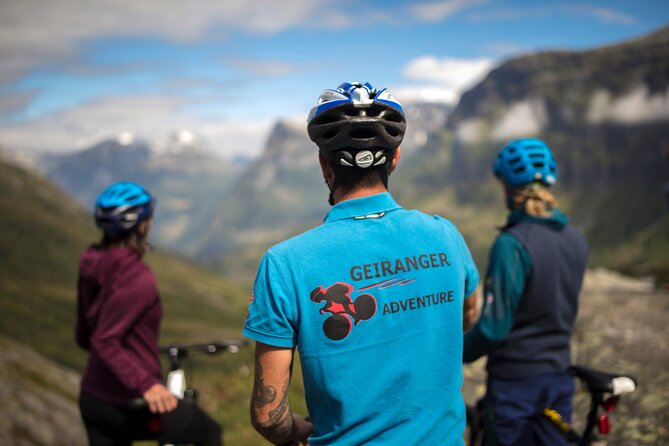
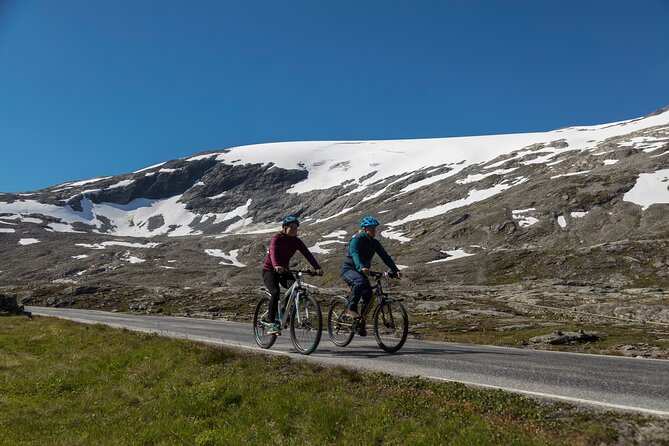
From a mountain lake high above Geiranger, you coast down one of Norway’s most dramatic roads for 16 kilometers. The reward is a steady stream of fjord views, waterfalls, and mountain scenery, with plenty of chances to stop for photos.
I like the small maximum group of six and the freedom to ride at your own pace. I also like that transport, bike, helmet, gloves, and visibility vest are included. The main catch is serious: you share a narrow public road with buses and other vehicles, and the ride is unguided.
Key points
- Start at 1,030 meters: A vehicle takes you from Geiranger to Djupvatn Lake before the downhill ride begins.
- Ride 16 kilometers: Most of the route runs downhill, with one short uphill stretch reported along the way.
- Stop at classic viewpoints: Look for Kvandalls waterfall, Opplenskedalen Valley, Knuten, and Flydalsjuvet.
- Ride independently: No guide accompanies you, so you set the pace and choose your photo stops.
- Equipment is supplied: Bike, helmet, bicycle gloves, and visibility vest are included.
- Think carefully about traffic: The road has no dedicated bike path or shoulder in places, and large buses use it.
From Djupvatn Lake to Geiranger by bike
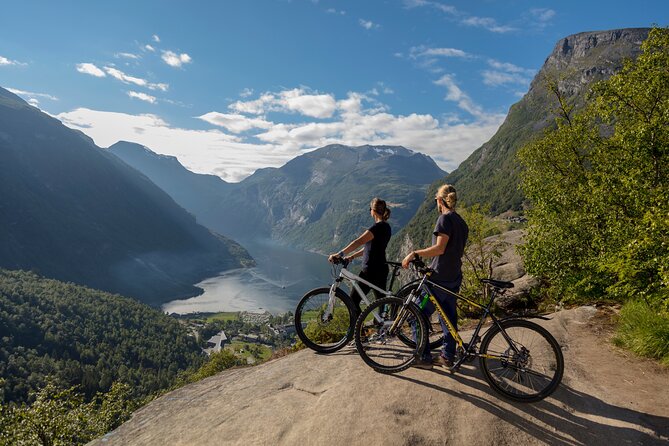
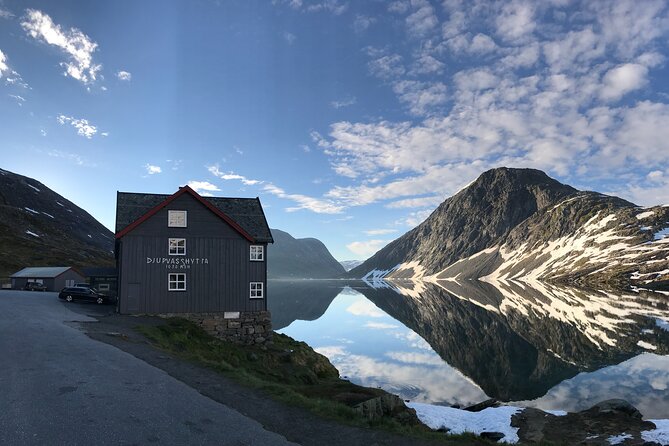
The ride begins well above the village at Djupvatn Lake, about 1,030 meters above sea level. You are driven uphill in an air-conditioned vehicle, so you save your energy for the ride itself and get a useful look at the road before setting off.
At the lake, staff provide the bike and safety equipment. You receive technical and safety instructions, along with advice for handling the descent. Then you are on your own for the 16-kilometer trip back toward Geiranger.
This is not a guided cycling tour with a leader pointing out every rock and waterfall. It is closer to a supported downhill ride. The company handles the uphill transfer and equipment, while you handle the road, the brakes, the stops, and the timing.
That arrangement works well if you enjoy independence. I like being able to stop whenever a waterfall or viewpoint catches my eye. It also means you need to pay attention, keep your own pace, and understand the route before you leave the vehicle.
More rides on two wheels around Norway:
- Geiranger Fjord: Downhill Self-Guided Bike Tour
★ 4.5 · 30 reviews - Olden: Fjord e-bike tour
★ 5.0 · 23 reviews - Fiordland Jet Boat and Biking Combo from Te Anau
★ 5.0 · 133 reviews
The road is the real attraction
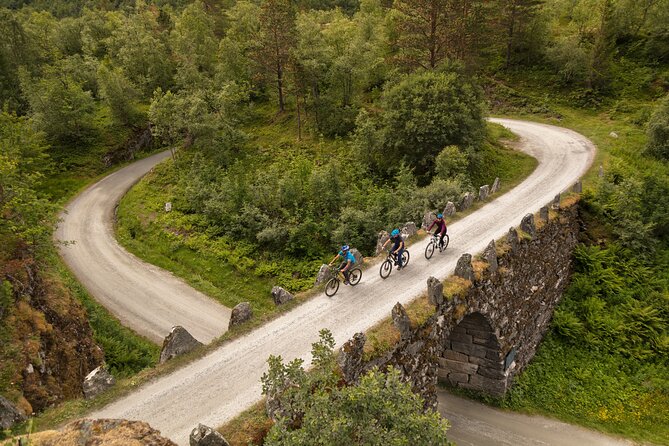
The scenery changes as you lose altitude. You begin beside a high mountain lake, then follow a winding road through steep mountain country toward Geirangerfjord. The fjord itself appears as a key visual reward later in the descent, framed by cliffs and green slopes.
The road gives you the feeling of moving through the scenery rather than simply looking at it from a coach window. You can pause for photographs, catch your breath, and take in the silence before continuing down.
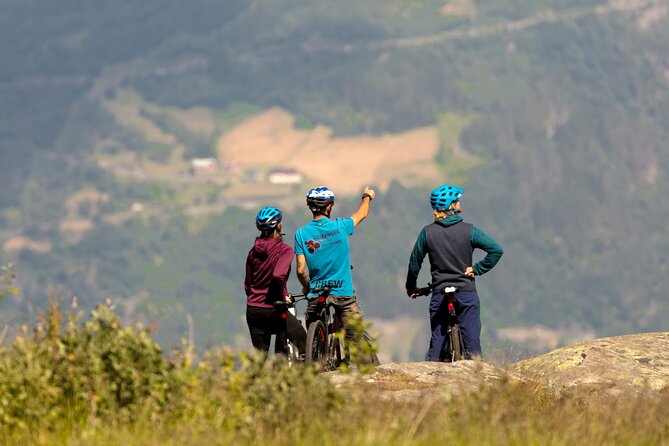
That freedom is one of the strongest reasons to choose this activity. Several people completed the route at a relaxed pace, stopping often for pictures. One rider even left the bike briefly to hike toward Storsaeterfossen Waterfall, then returned to continue the ride. The supplied details do not promise that this side trip will fit every schedule, so treat it as an option only if you have enough time and clear instructions.
The ride is not all effortless coasting. A small uphill portion appears along the way, and some people walked their bikes there. For most riders, that short section is a minor nuisance rather than a serious test.
What you see along the 16-kilometer route
The route includes several named points of interest. You may not stop for exactly the same amount of time at each one, since there is no guide setting the schedule, but these are the places that give the ride its shape.
Blåfjell mountain viewpoint
The viewpoint at the foot of Blåfjell gives you an early chance to pause and look back across the high mountain setting. This is a good place to settle into the bike, check your comfort, and make sure the brakes and saddle feel right.
Because the experience is downhill, your first few minutes matter. Do not rush away from the starting point before you know how the bike handles. A short equipment check can make the rest of the ride far more pleasant.
Same water, a different deck under you:
- From Bergen: The Original Fjord Cruise to Mostraumen
★ 4.7 · 8,440 reviews - Stavanger: Electric Fjord Cruise to Lysefjord & Preikestolen
★ 4.6 · 8,385 reviews - Oslo: Oslo Fjord Sightseeing Cruise by Sailing Ship
★ 4.5 · 5,790 reviews - Oslo: Scenic Fjord Cruise with Audio Guide Commentary
★ 4.5 · 5,375 reviews
Kvandalls waterfall
Waterfalls are part of the character of the Geiranger area, and Kvandalls waterfall is one of the route’s memorable stopping points. You can pull over for photographs and enjoy the contrast between the moving water and the quiet mountain road.
Rain and recent snowmelt can affect how forceful a waterfall looks. The tour requires good weather, but even a clear day does not guarantee the same water flow every season.
Opplenskedalen Valley
As you continue through Opplenskedalen Valley, the scenery opens into a broader mountain setting. This is one of the places where an unguided ride makes sense. You can take a few minutes to absorb the scale of the valley instead of being hurried along by a group schedule.
I would keep your camera or phone easy to reach, but secure it carefully. You will be handling a bicycle on a road, not walking on a level viewpoint path.
Knuten
Knuten adds another notable point to the descent and helps break the route into manageable sections. By this stage, you should have a good feel for the bike and be more comfortable choosing when to coast, brake, or stop.
The road itself remains central to the experience. You are not riding on a closed track. You need to watch the surface, anticipate turns, and leave room for vehicles.
Flydalsjuvet
Flydalsjuvet is the best-known stop on the route and the visual finale for many riders. The viewpoint is famous for its steep mountain setting and views toward Geiranger and the fjord.
This is the place where I would allow extra time if conditions are good. A clear day can make the fjord, cliffs, and village below especially striking. It is also a popular photo location, so your experience may depend on how busy the road and viewpoint are at the time of your visit.
The important question: how safe and comfortable is the ride?
The activity includes a bike, helmet, bicycle gloves, and visibility vest. Those inclusions are useful, but they do not remove the need for your own care. You should have moderate physical fitness and be comfortable riding a bicycle on a public road.
The biggest practical concern is the road. It does not have a dedicated bike path or shoulder throughout, and large buses may pass close by. One rider decided not to continue after seeing the traffic and road conditions. The driver, Marcell, was described as gracious and stopped for photographs during the descent instead.
Other riders found traffic accommodating, but conditions can vary with the time of day, weather, and road activity. If riding beside buses makes you nervous, ask yourself that question before booking. This is not a secluded forest cycle path.
Equipment quality also deserves attention. Most experiences with the bikes were positive, with riders calling them easy to manage and suitable for the descent. One very unhappy rider reported poor brakes, worn tires, a loose kickstand, undersized helmets, difficult strap adjustments, and a badly damaged visibility vest.
That appears to be an outlier among the supplied accounts, but it is still useful information. Before leaving Djupvatn Lake, check the brake response, tire condition, saddle height, helmet fit, and vest. Ask for adjustments before the vehicle departs. You should also ask what to do in case of a flat tire or mechanical problem.
The company does not provide a guide on the road. Make sure you know where to go, how to contact the office, and what to do if you need help. Phone service may not be dependable, and one rider had difficulty accessing contact information at the top.
Why the small group size helps
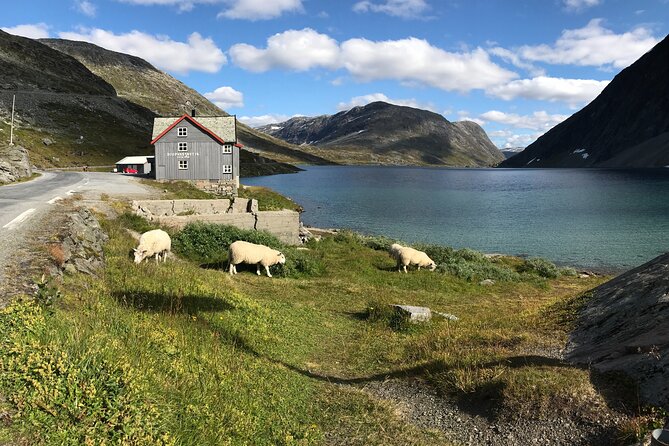
The maximum group is six people. That is a good fit for this type of ride because a smaller group can load into the vehicle more easily and spread out on the road.
Do not expect a group cycling formation. You are still riding independently, and the people in your party may move at different speeds. The small number simply makes the transfer and equipment handout more manageable than a large excursion.
The independent format also suits couples and friends who want their own rhythm. A confident cyclist can coast ahead while a less experienced rider takes more stops, provided everyone understands the route and meeting arrangements.
How difficult is the downhill cycling?
You need moderate physical fitness, but the ride is not described as a hard endurance challenge. Much of the route is downhill, and one 67-year-old rider found the nearly 10-mile ride easy to manage. Another person who was not a strong cyclist felt unnecessarily worried beforehand and found the descent comfortable.
Still, downhill riding has its own demands. You need hand strength and attention for braking, confidence around bends, and enough control to slow down before a turn. Speed can build quickly even when pedaling is minimal.
The short uphill section may require some pedaling or walking. You may also want to stop for rest, photographs, or a quick check of your equipment. The 2-hour-30-minute duration gives you an approximate framework, but weather, traffic, and the number of stops will affect how the outing feels.
I would not choose this activity if you are uncomfortable riding near vehicles or have limited bicycle control. I would choose it if you ride casually or regularly and like the idea of a scenic descent without a demanding climb.
What the price includes, and what it does not
The cost is $160.09 per person. That is not cheap for a 2.5-hour activity, especially because no guide rides with you.
You are paying for more than a basic bike rental, though. The price includes the uphill vehicle transfer, an air-conditioned vehicle, the bike, helmet, gloves, visibility vest, equipment handoff, and the chance to start at a high mountain lake rather than work your way uphill.
For some people, that is good value. The scenery is the main event, and the transfer saves time and effort. The ride also gives you control over the stops, which can be more satisfying than sitting in a coach and photographing through glass.
For others, the price will feel high because the road experience is unguided. You are not receiving a running commentary, route escort, or mechanical support vehicle. If you mainly want a photo stop at Flydalsjuvet, a standard scenic excursion may make more financial sense.
At this price, I would expect the equipment to be in solid condition. Check it carefully before starting. The positive accounts describe good bikes and helpful staff, but the serious equipment complaint means you should not skip that check.
Timing, meeting point, and weather
You meet at Geirangervegen 10, 6216 Geiranger, Norway, and the activity ends back at the same meeting point. The experience is offered in English, and confirmation is provided when you book.
It is wise to allow a little flexibility around the start. One outing began about 20 minutes late. That may not matter on a normal day, but it could matter if you are fitting the ride around a cruise stop or another timed activity.
The tour requires good weather. If poor weather cancels the activity, you can receive a different date or a full refund. You can also cancel for a full refund up to 24 hours before the start time. Changes or cancellations inside 24 hours are not accepted for a refund.
The experience is often booked well ahead, with an average booking lead time of 74 days. That suggests you should plan early if your schedule is fixed, especially if you are visiting Geiranger during a busy season.
Who should book this Geiranger bike ride?
I would recommend it to you if:
- You enjoy cycling and feel comfortable controlling a bike downhill.
- You want active sightseeing instead of a coach-only view.
- You like making your own photo stops.
- You can handle riding on a public road with vehicle traffic.
- You want mountain and fjord scenery without climbing the full route.
- You are traveling as a couple or small group and prefer a flexible pace.
I would think twice if:
- You want a guide beside you throughout the ride.
- You expect a protected cycle path.
- You dislike traffic passing close by.
- You need guaranteed, highly adjustable equipment.
- You want a short, low-effort photo excursion rather than a cycling activity.
The ride is also a good option for mixed-ability couples. Stronger cyclists can ride comfortably, while less confident riders can coast slowly and stop often. The key is to be honest about road confidence, not just fitness.
Should you book it?
Book this experience if the idea of coasting from Djupvatn Lake through waterfalls, valleys, and fjord viewpoints sounds better than viewing Geiranger from a vehicle. The freedom to stop, the small group, and the striking route make it a memorable active outing.
Before you commit, accept two conditions: the road is shared with buses, and the ride has no guide. At the start, inspect the brakes, tires, saddle, helmet, and vest. Ask for the route and emergency contact details, then ride at a controlled pace.
For a confident cyclist, this can be one of the best ways to see Geiranger. For someone seeking a protected path or a fully guided tour, the price may not match the service. The scenery is extraordinary, but your enjoyment depends on being comfortable with the road itself.
FAQ
Where does the Geiranger downhill bike ride start?
You meet at Geirangervegen 10, 6216 Geiranger, Norway. The vehicle then takes you to Djupvatn Lake, about 1,030 meters above sea level, where the cycling begins.
How long does the experience last?
The experience lasts approximately 2 hours and 30 minutes.
How far do you ride?
You ride about 16 kilometers downhill from Djupvatn Lake toward Geiranger.
Is a guide included during the bike ride?
No. The downhill ride takes place without a guide. Staff provide instructions and tips before you begin.
What equipment is included?
A bike, helmet, bicycle gloves, and visibility vest are included.
Is transportation included?
Yes. An air-conditioned vehicle transports you to the biking location and the activity ends back at the meeting point.
What sights can you see along the route?
The route includes viewpoints near Blåfjell mountain, Kvandalls waterfall, Opplenskedalen Valley, Knuten, and Flydalsjuvet.
Do I need to be physically fit?
You should have a moderate level of physical fitness. Most of the ride is downhill, but one short uphill section may require some pedaling or walking.
Is the ride suitable in all weather?
No. The experience requires good weather. If poor weather causes cancellation, you can receive a different date or a full refund.
Can I cancel for a refund?
You can cancel at least 24 hours before the start time for a full refund. Cancellations or changes made less than 24 hours before the start time are not accepted for a refund.
Fresh listings around Norway
- Fjord Houseboat Cruise in Oslo. 100 % electric. BYO★ 5.0 · 3 reviews
- 4 hours Best View of the Oslofjord Winter Edition★ 4.0 · 15 reviews
- Panoramic Peaks and Oslo’s Best Fjord Views Hike★ 3.0 · 2 reviews
- Private Oslofjord Island Hopping Tour★ 4.5 · 8 reviews
- Private tour, Bergen to Oslo – Nærøyfjord Cruise & Flåm Railway★ 5.0 · 6 reviews
- Oslo’s Ultimate Fjord View Hike & Norwegian Waffle Workshop★ 5.0 · 4 reviews
- Oslo Nature walks: Forest to Fjord★ 5.0 · 9 reviews
- 7 hours Private Limousine tour combined Oslo & Tyrifjord including “The Twist”★ 5.0 · 2 reviews
Andalsnes Fjord Tours, compared.
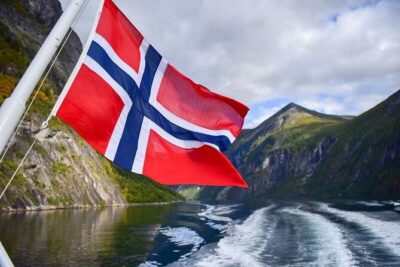
Guided kayak tour “The Seven Sister Tour” on the Geiranger Fjord – 4 h
Read our review →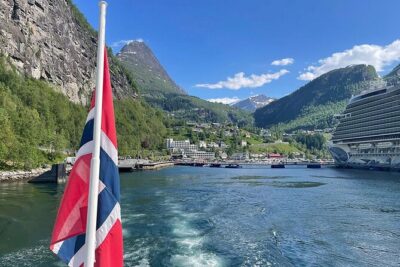
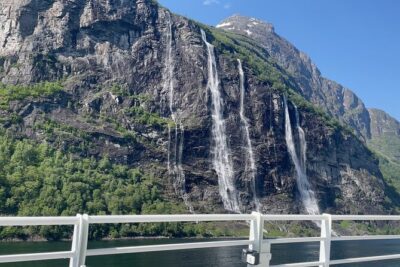
Geiranger Fjord Tour (Geiranger-Hellesylt one way)
Read our review →
Browse the lists this tour appears in