
Reviewed · OSLO
Oslo Sea Kayak Tour: Explore The Incredible Oslofjord
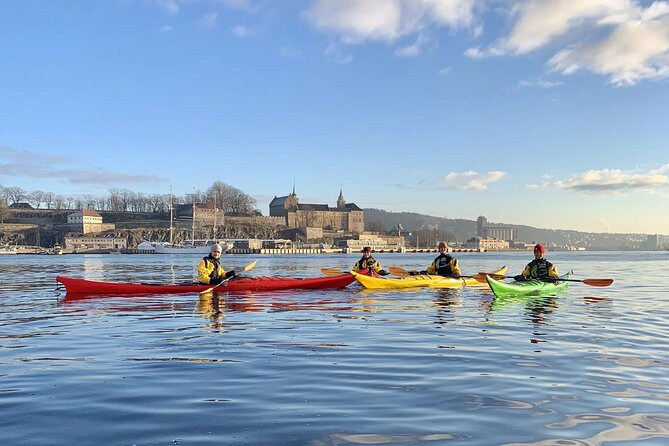
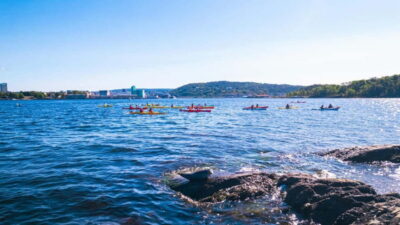
Oslo looks different from a kayak seat. You glide past the Opera House, Akershus Fortress, Aker Brygge, and the Munch museum, with the city rising behind you and the fjord opening ahead. I like the central Tjuvholmen starting point and the fact that guides such as Chris, Olivia, Dean, and Christian have earned praise for clear instruction and calm handling.
I also like that beginners and families can join without previous kayaking experience, with children under 13 sharing a double kayak with an adult. The main consideration is the weather: wind can make the harbor choppy, and actual paddling time may be less than 90 minutes once changing, instruction, and packing up are included.
Key points to know before you paddle
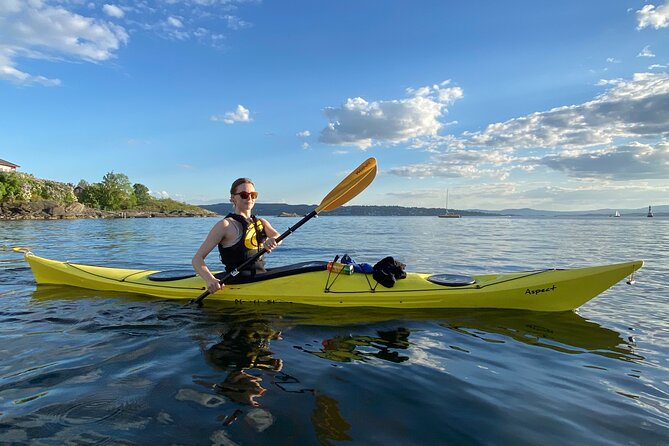
- The route links Oslo’s waterfront sights: You pass the Opera House, Aker Brygge, Akershus Fortress, Astrup Fearnley Museet, Munch, Deichman Bjørvika, and Hovedøya.
- No kayaking background is required: Your guide explains how to handle the boat before you leave shore.
- The tour is family-friendly: Children from age 4 can join, and ages 4 to 12 must use a double kayak with an adult.
- Weather shapes the outing: Wind and waves may shorten or alter the route for safety.
- The group is kept fairly small: The maximum is 15 people, which helps the guide watch the whole group.
- Bring proper clothing: Kayak, paddle, life jacket, storage, and changing space are supplied, but waterproof clothing, sunscreen, sunglasses, and water are your responsibility.
Why Oslofjord is best seen from the water
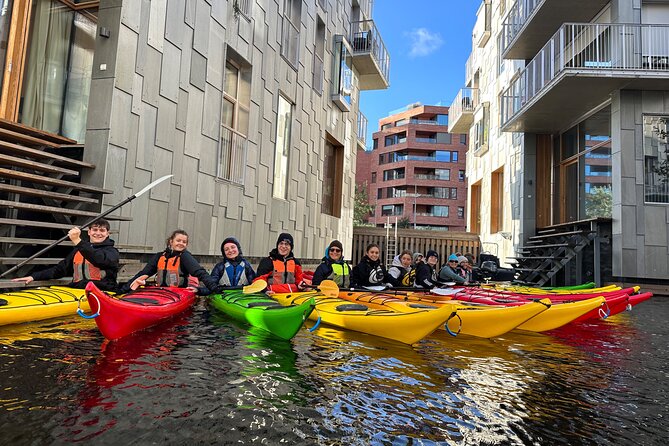
Oslo is a city built around the fjord, yet many visitors experience it only from streets, museums, and waterfront cafés. A kayak gives you a slower view. You notice the sound of the paddle, the wake of passing boats, the changing angle of the shoreline, and the way Oslo’s modern buildings sit beside older stone fortifications.
This is not a remote wilderness trip. You remain close to central Oslo, paddling through the city’s harbor and along the inner fjord. That is the appeal. You get outdoor activity and city sightseeing in one outing, without spending half a day reaching a distant launch point.
The route is also a good match for a short stay. At about two hours from start to finish, it can fit into a morning or afternoon between museum visits and meals. The schedule includes preparation and packing up, so do not expect two full hours of nonstop paddling. One outing provided just under an hour and a half on the water, which is a sensible amount for people still learning the basics.
At $117.86 per person, this is not a bargain activity. You are paying for equipment, instruction, a guide, changing rooms, secure storage, and a small-group outdoor experience in a high-cost city. I think the price makes better sense if you want an active way to see Oslo rather than another standard sightseeing tour.
More paddling days around Oslo:
- Oslo Sea Kayak Tour “Fjord City”
★ 4.7 · 69 reviews - 3- Hour Kayak Tour on the Oslofjord
★ 5.0 · 60 reviews - Oslo: 3-hour Kayaking Trip on the Oslofjord
★ 4.9 · 43 reviews
Starting in Tjuvholmen near the city center
The meeting point is Mad Goats Tjuvholmen at Strandpromenaden, 0252 Oslo. Tjuvholmen is a waterside district, and the launch point is a short walk from Oslo’s central station area. The central location matters: you can reach it without arranging private transport, and the activity ends where it begins.
Before getting on the water, you receive a kayak, paddle, and life jacket. The team provides changing rooms and a secure place for personal items. Waterproof bags are available to borrow if you need to protect small belongings, though I would still keep what you bring to a minimum.
Wear clothing suited to the day’s forecast. The operator does not supply waterproof clothing or wet-weather gear. Even on a pleasant day, your seat and feet can get wet, so quick-drying layers are a wise choice. Bring your own drinking water, sunscreen, and sunglasses.
The group can reach 15 people. That is large enough to create a social outing, but small enough for a guide to keep track of paddlers. The pace may be set by the slowest kayak, so strong paddlers should expect some waiting rather than treating this as a workout.
Learning the basics before leaving shore
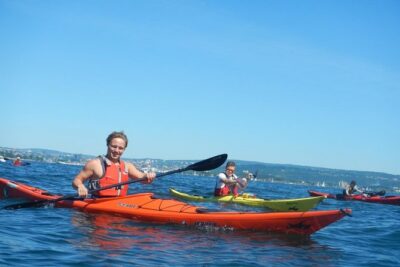
You do not need previous kayaking experience. The guide gives you instructions on how to paddle, turn, and handle the boat before the group sets off. First-timers have found the kayaks easier to steer than expected, but you still need a moderate level of fitness and enough comfort in the water to swim.
That swimming recommendation is practical, not a test. The tour takes place on the fjord, and the company notes that you may want to take a dip after the outing. You do not have to swim during the tour, but you should be able to manage yourself around water.
The boats are suitable for adults and children. The minimum age is 4, and children ages 4 to 12 must share a double kayak with an adult. Children under 13 are also required to use a double kayak. This setup gives younger children a secure place beside a parent, though it means an adult must do most of the paddling and steering.
The guides are an important part of the experience. Chris, Melina, Olivia, Dean, and Christian are among the guides praised for patient instruction, safety awareness, and a good sense of humor. Guide assignments can change, so do not book expecting a particular person, but the strongest pattern is clear: instruction and group safety receive serious attention.
From the Opera House to Aker Brygge
The first part of the route takes you past the Oslo Opera House. Its white, sloping roof reaches down toward the water, allowing people to walk across parts of the building. From a kayak, you see the building at water level, where its angular shape makes more sense as part of the harbor than as an isolated museum or performance venue.
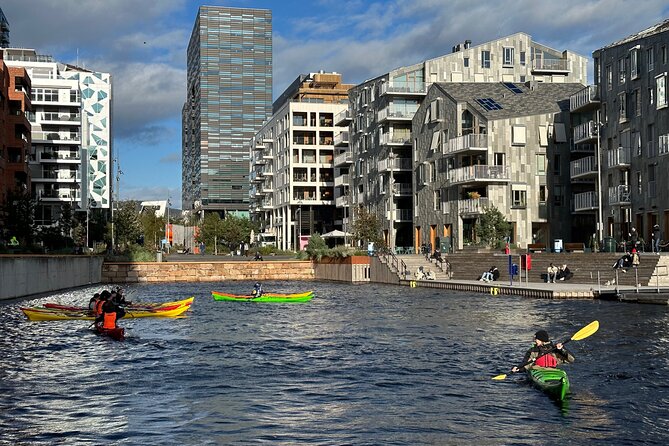
You then paddle toward Aker Brygge, one of Oslo’s best-known waterfront districts. From the water, its restaurants, apartments, and harbor activity form a lively urban edge. This section gives you a clear feel for Oslo’s modern waterfront redevelopment, and it is an easy place to take photographs if conditions allow.
The route is not a silent nature trip. You share the harbor with city activity, boats, and changing water conditions. That can be a drawback if you want solitude, but it gives the outing a strong sense of place. You are not simply paddling on a generic lake. You are seeing Oslo from the same water that shaped its daily life.
More fjord trips around Oslo:
- Oslo: Oslo Fjord Sightseeing Cruise by Sailing Ship
★ 4.5 · 5,790 reviews - Oslo: Scenic Fjord Cruise with Audio Guide Commentary
★ 4.5 · 5,375 reviews - Oslo: 100% Electric Oslofjord Sightseeing Cruise
★ 4.4 · 2,041 reviews - Oslo: Fjord Evening Cruise with Shrimp Buffet
★ 4.5 · 1,956 reviews
Akershus Fortress from the fjord
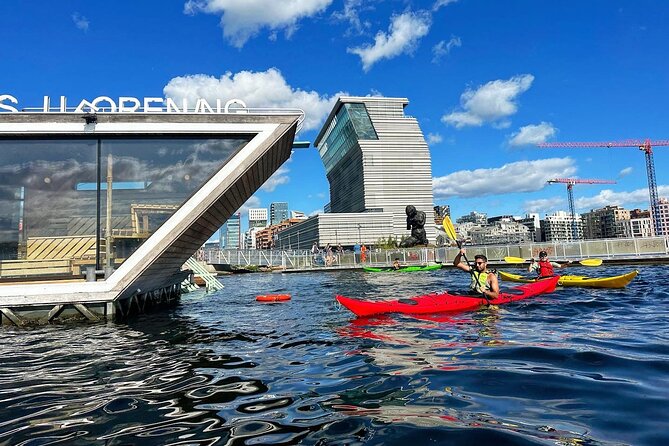
Akershus Castle and Fortress is one of the most striking sights on the route. The fortress sits above the harbor, and its walls and stone structure offer a strong contrast to the Opera House and Aker Brygge.
From land, you experience Akershus as a historic site with paths, courtyards, and city views. From the kayak, you get a wider sense of its position. The fortress protected the harbor and still gives the waterfront a sturdy, older character. The guide may point out sights and local details as the group moves along, but the amount of commentary can depend on water conditions and the group’s pace.
This is one reason the kayak works well as a first look at Oslo. You see major sights without committing to a long indoor tour. You can return later to explore the fortress on foot if it catches your interest.
Tjuvholmen, Astrup Fearnley, and the beach
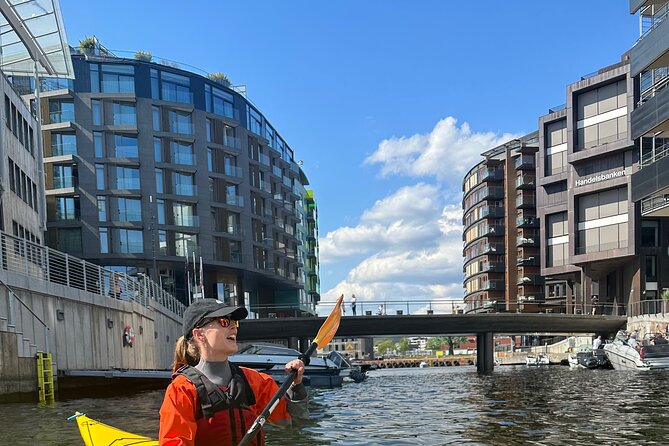
The route continues around Tjuvholmen, the same district where the tour begins. The area is known for contemporary architecture, waterfront paths, art, and public spaces. You pass the Astrup Fearnley Museum, a notable contemporary art museum near the water.
Seeing the museum from a kayak will not replace a visit inside. Instead, it gives you an exterior view of its unusual setting beside the harbor. If you enjoy modern design, this part of the route adds another layer to the city tour.
Tjuvholmen Bystrand, or Tjuvholmen City Beach, adds a more relaxed note. The small urban beach shows how Oslo residents use the waterfront for leisure, not only transport or commerce. Conditions may allow time for a swim after kayaking, but that should be treated as an option rather than a promised part of the tour.
Munch, Deichman Bjørvika, and the changing skyline
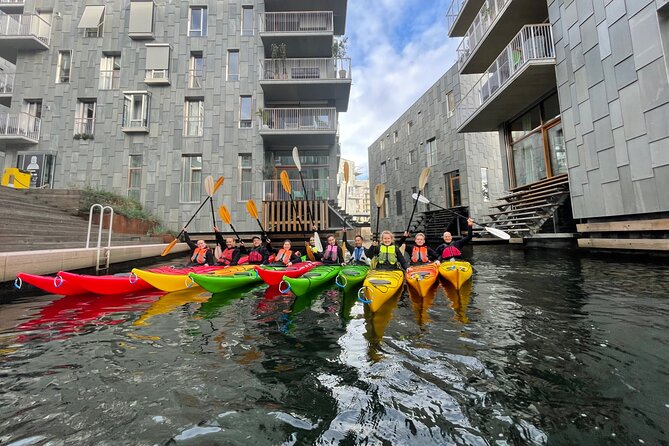
The route includes views toward Munch and Deichman Bjørvika, two major cultural buildings in the Bjørvika area. The Munch museum is instantly recognizable by its tall, slightly tilted form, while Deichman Bjørvika is Oslo’s central public library.
Together, these buildings show the city’s newer cultural district. From the water, you can compare their shapes and positions with the Opera House, which helps you understand how Oslo has expanded and reshaped its harborfront.
This portion is especially useful if you plan to visit the museums later. You get a quick visual orientation before seeing them from ground level. The kayak does not stop at every sight for a full visit, so plan separate museum time if you want exhibitions, interiors, or detailed information.
Hovedøya and the wider Oslofjord
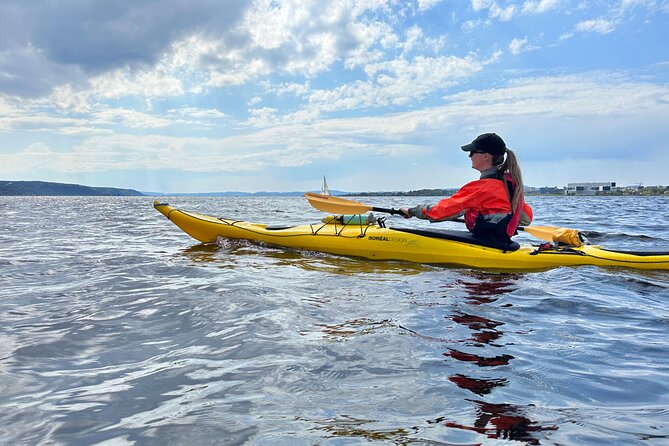
The tour may continue toward Hovedøya, one of the islands in the inner Oslofjord. Reaching toward the islands gives the outing a more open-water feel and provides a break from the dense city edge.
The exact route depends on wind, waves, and the ability of the group. On a calm day, you can expect a pleasant change from harbor walls and buildings. On a windy day, the same stretch can feel more demanding. Guides have shortened routes when the water became too choppy, and that is the right call for a beginner-focused outing.
This is where you should set realistic expectations. The tour does not promise a long expedition around the Oslofjord. It offers a compact introduction to the inner fjord, with city views, island scenery, and enough paddling to make you feel involved rather than simply carried along.
Wind, waves, and the real pace of the tour
Weather is the biggest variable. Calm conditions make steering easier and allow more time to look around. Wind and chop require more effort, especially if you are new to kayaking or sharing a boat with a child.
The guides have handled choppy days by giving extra advice and shortening the route when needed. That can be disappointing if you have imagined a longer paddle, but safety should take priority. One outing was shortened because the harbor became challenging, while another still included a rewarding trip toward the islands in less difficult conditions.
You may also spend time waiting for a slower kayak. That is normal for a mixed-ability group. If you want a fast, athletic session, this may feel restrained. If you want a guided introduction that keeps a family or mixed group together, the slower pace is useful.
A small practical detail matters here: check the inside of your kayak before setting off. One person found several inches of water in the bottom and ended up with wet feet and a wet seat from the start. Kayaking often involves some spray, but asking the guide to empty the boat first can make the beginning more comfortable.
Who gets the most from this two-hour outing
I would choose this tour for a first kayak experience, a family activity, or a short Oslo visit when you want to combine sightseeing with movement. Children from age 4 can join under the stated double-kayak rules, and older children have enjoyed the outing without it becoming too strenuous.
It also suits people who feel nervous about trying a kayak. The instruction comes before you leave shore, the group stays with a guide, and the route remains near central Oslo. You still need a moderate fitness level and the ability to swim, but you do not need technical skills.
I would think twice if you dislike getting wet, need a guaranteed route, or want a serious workout. The water can be choppy, the pace can vary, and the actual paddling portion is shorter than the full two-hour appointment.
The tour is offered in English, with mobile ticketing and confirmation at booking. Service animals are allowed, and the meeting point is near public transportation. The operator says most people can participate, but the age and swimming guidance still matter.
Price, cancellation, and practical value
At $117.86, the cost is high compared with a self-guided walk along the harbor. The difference is that you receive the kayak, paddle, life jacket, instruction, guide, changing area, secure storage, and access to a planned route. You also avoid the hassle of arranging equipment yourself.
I think the value is strongest for families and first-time paddlers. A guide can adjust the pace, offer steering help, and decide when conditions call for a shorter route. For confident kayakers, the price may feel less attractive because you may prefer renting independently for longer.
Free cancellation is available up to 24 hours before the start time. Changes or cancellations inside that window are not refunded. If poor weather forces the operator to cancel, you can choose another date or receive a full refund. The same applies if the minimum number of participants is not reached.
Should you book the Oslo Sea Kayak Tour?
Book it if you want to see Oslo’s harbor from a fresh angle, are happy with a relaxed group pace, and can accept weather-dependent plans. The best parts are the central launch point, the mix of major city sights and fjord scenery, and the supportive approach for beginners.
Skip it if your priority is long-distance paddling, dry clothing, or a fixed route to Hovedøya. For most people who want an active two-hour introduction to Oslofjord, this is a well-planned choice. Bring layers, expect some splashing, and treat the guide’s weather decisions as part of a safe outing rather than a disappointment.
FAQ
Where does the Oslo Sea Kayak Tour start?
It starts at Mad Goats Tjuvholmen, Strandpromenaden, 0252 Oslo, Norway.
Where does the tour end?
The activity ends back at the Tjuvholmen meeting point.
How long is the tour?
The full activity lasts about two hours, including preparation and packing up. Actual time on the water can be under 90 minutes.
Do I need previous kayaking experience?
No. Previous experience is not required, and the guide provides kayak instructions before the group sets off.
What equipment is included?
A kayak, paddle, and life jacket are included. Changing rooms, secure storage, and waterproof bags are also available.
What should I bring?
Bring drinking water, sunscreen, sunglasses, and clothing suited to the weather. Waterproof clothing and wet-weather gear are not included.
Can children join?
Yes. The minimum age is 4. Children ages 4 to 12 must use a double kayak with an adult, and children under 13 must also use a double kayak.
How many people can join the tour?
The maximum group size is 15 people.
Is swimming ability required?
The operator recommends that you know how to swim. You may have the chance to swim in the Oslofjord after the tour, although swimming is not the main activity.
What happens if the weather is poor?
The tour requires suitable weather. If the operator cancels because of poor conditions, you can choose another date or receive a full refund.
Fresh listings around Oslo
- Fjord Houseboat Cruise in Oslo. 100 % electric. BYO★ 5.0 · 3 reviews
- 4 hours Best View of the Oslofjord Winter Edition★ 4.0 · 15 reviews
- Panoramic Peaks and Oslo’s Best Fjord Views Hike★ 3.0 · 2 reviews
- Private Oslofjord Island Hopping Tour★ 4.5 · 8 reviews
- Private tour, Bergen to Oslo – Nærøyfjord Cruise & Flåm Railway★ 5.0 · 6 reviews
- Oslo Nature walks: Forest to Fjord★ 5.0 · 9 reviews
- Oslo’s Ultimate Fjord View Hike & Norwegian Waffle Workshop★ 5.0 · 4 reviews
- 7 hours Private Limousine tour combined Oslo & Tyrifjord including “The Twist”★ 5.0 · 2 reviews
Fjord Kayaking Tours, compared.
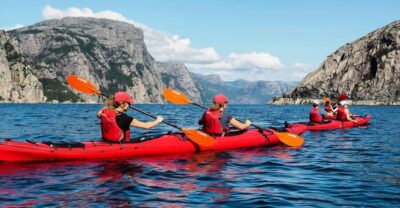
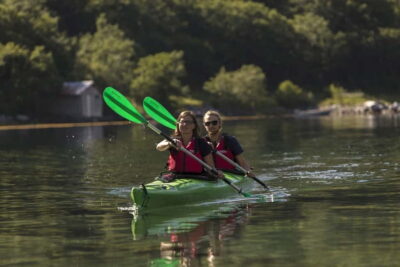
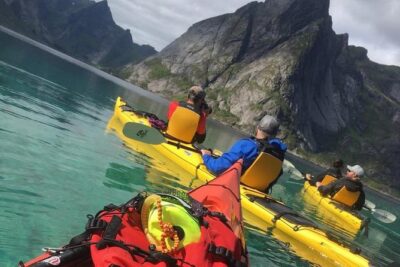
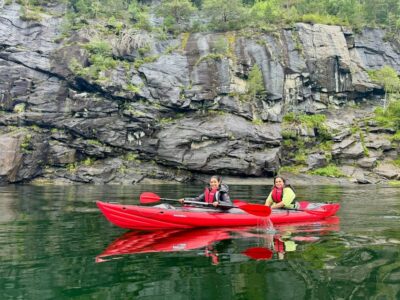
Guided kayak tour “The Seven Sister Tour” on the Geiranger Fjord – 4 h
Read our review →Browse the lists this tour appears in